
April 2016
Published by the Law Offices of Alena Shautsova, 2908A Emmons Ave, Brooklyn, New York 11235
Subscribe to our monthly free legal updates, SHAUTSOVA’S UPDATE.
Follow our Blog Posts commenting on the latest developments in the immigration and civil rights world
http://www.workharassmentattorneys.com/
http://www.russianspeakinglawyerny.com

“Be the change that you wish to see in the world.”
― Mahatma Gandhi
- H1B Lottery: To Play or Not to Play

Author: New York Employment Immigration Lawyer Alena Shautsova
On April 7, 2016 USCIS announced that the cap for H1B petitions for the next fiscal year has been reached. It means that no new petitions subject to cap would be accepted. USCIS also announced that it received more petitions that the allocated quota and all received petitions subject to cap will be participating in the “lottery.”
As a reminder, an H1B work visa is a program that allows professionals to work in the U.S. legally for a maximum period of 6 years, unless the employer also sponsors the worker for permanent residency or a green card. There are “cap” and “cap exempt” jobs depending on a) whether the employee was subject to cap within the previous years and b) if the employment is such that allows to avoid the “cap.”
Despite the Immigration community’s outreach to the government to increase the quotas for legal work immigrants, so far it has not happened. Traditionally, there were more applications submitted for the 65,000 allocated cap, and 20,000 advanced degree exemption.
At the beginning of each year, many ask themselves a question: should I participate in H1B process or should I choose a safer option? May multiple employers for me? Will I be able to receive a new visa without leaving the country?
The answers to these questions should be based on specific facts and specific situations. An H1B status is good in that it allows for a legal employment in the United States. The negative here is that there is a maximum number of years one may hold it, and then the person has to change the status, be sponsored for a green card or leave the country and remain outside for at least 1 year before coming back on H1B visa. So, whether or not one should rely on H1B possibility is a personal decision. The other options might be F1 or student status, L1 status, or investors’ options. In addition, there are other “work” employer-specific visas such as P or O.
It is possible that multiple employers file for one person, but the person will have to choose one full time employer if both petitions get chosen in the lottery. It possible to have a full time plus part time employment by different employers, but USCIS may have doubts as to the individual’s ability handle such workload.
It is possible to obtain an H1B status without leaving the country, but mostly for those who hold F1 status. The reason is that usually, the person’s existing status would expire before he/she can be admitted into the US in H1B status and this would create an impermissible “gap” in status preventing USCIS from granting a change of status application.
Finally, it should be noted that it is up to an employer to sponsor or not sponsor an employee. So, if one considers having an H1B status in the US, he/she should first discuss everything with an employer and it is an employer who should hire and consult with an Immigration attorney.
- Parole In Place: Why to Use it and Where to Submit it
Author: New York Immigration lawyer Alena Shautsova
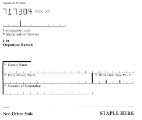
Parole in place is a discretionary action by the U.S. government that allows an individual who is in the United States without being properly inspected and admitted to be “admitted” into the country without leaving it. Parole in place can be applied for by members of the military families, as well as by individuals without connections to the military. Non-military parole in place is even harder to get that the one for military members. I would say, almost impossible, however, it can be given pursuant to INA § 212(d)(5)(A), for “urgent humanitarian reasons or significant public benefit.
Why one would need a parole in place? It is because without it, those individuals who entered the country without inspection, in most cases, would not be able to “adjust” or receive a permanent residency without leaving the United States. Again, parole in place is not a freely granted and it is not a usual route so to say. However, it is a possibility in certain, compelling cases.
One should direct their request for parole in place to the ICE (ERO) if an individual is in removal proceedings, or is subject to a final order of removal, or was previously paroled by ICE, regardless of current status. In all other cases, it is USCIS , district director who would have jurisdiction over parole in place application.
What needs to be submitted with the request? First, one has to submit application I-131 form. Then, an applicant has to submit supporting documents. Even for military parole place, a copy of qualifying relative’s military ID is not enough. An applicant has to explain how and why he deserves the favor of parole in place. Such document may include affidavits, copies of medical and financial documents, photos, copies of tax returns, etc. Each applicant’s story is different, and each submission will vary.
How long one would wait for the decision? The wait time will depend on a particular office. It can be from 4 months to a year, a longer. It all depends. If the case is with ERO, an attorney should meet with an officer working on the case and discuss the timeline and concerns.
- Alena Shautsova and her Client meet Belinda Groneman form Congressman Lee Zeldin’s office who helped to expedite client’s naturalization case.

Read more at: http://www.pr.com/press-release/665539
- Visit our EMPLOYMENT AND LABOR LAW WEBSITE: http://www.workharassmentattorneys.com/ to find answers to difficult questions employees face at work: how they need to complain, and who they need to let know regarding uncomfortable environment; when is the time to file a formal complaint?; how to resolve a conflict with an employer?… and more!
- Processing Times THE USCIS PROCESSING TIMES:
https://egov.uscis.gov/cris/processTimesDisplay.do
- The Administrative Appeals Office http://www.uscis.gov/portal/site/uscis/menuitem.eb1d4c2a3e5b9ac89243c6a7543f6d1a/?vgnextoid=dfe316685e1e6210VgnVCM100000082ca60aRCRD&vgnextchannel=dfe316685e1e6210VgnVCM100000082ca60aRCRD
- Labor Department Processing Times
The following link provides approximate times for PERM processing periods:
http://icert.doleta.gov/#fragment-2
- Nonimmigrant Visa Wait Times
Depending on your location, the US Department of State provides the following approximate visa wait times:
http://travel.state.gov/visa/temp/wait/wait_4788.html?post=Kyiv&x=86&y=13
Watch our Videos: https://www.youtube.com/channel/UCBSrIQswMdYh_T1qToEZRrQ
Read our answers on AVVO and Law Q&A!


Leave a Reply