September 2016
Published by the Law Offices of Alena Shautsova, 2908A Emmons Ave, Brooklyn, New York 11235
175 Eileen Way, Syosset NY 11791
Subscribe to our monthly free legal updates, SHAUTSOVA’S UPDATE.
Follow our Blog Posts commenting on the latest developments in the immigration and civil rights world
http://www.workharassmentattorneys.com/
http://www.russianspeakinglawyerny.com

“Be the change that you wish to see in the world.”
― Mahatma Gandhi
NEWS FLASHES:
- Watch our recent video on changes to I 601A Provisional Waiver Program:
Pokémon and Immigration: things in common
- 3 Common Reasons for Denial of Asylum After the Interview
Author: USA Asylum Lawyer Alena Shautsova

In the United States, a person who is applying for asylum affirmatively (or when a person is not in the Immigration court proceedings) will have to appear for an interview with an Asylum officer. An applicant may wait for several years before he/she is called for an interview, may forget important details due to stress, trauma or prolonged time intervals between the events and the interview; an applicant might be under a lot of pressure and stress during the time of the interview… But all this does not matter when an asylum officer renders his/her decision.
I receive a lot of inquiries asking me about the chances a person would have to “pass” the interview and avoid a referral to court. While it is impossible to predict anyone’s future, I would like to share here the factors that would almost surely render a denial after an asylum interview. Having this information, you might prepare for the interview a little better, and manage to avoid these pitfalls.
- Missed One Year Deadline
An applicant for asylum in the US has one year from the day of entry to file his/her application. If the year is missed without a good excuse, the asylum will be denied. (An applicant might still qualify for a different relief, maybe withholding of removal or relief under Convention Against Torture, but not asylum).
A missed asylum deadline requires an asylum officer to inquire into the reasons of the “default” and take a responsibility to forgive the applicant. In many cases, the officers would not do that. When the deadline is missed, there is a very high probability that the case will be referred to an Immigration Court. The only cases that might still be granted within the USCIS system are the ones that fall squarely into the Asylum Officer’s Training Manual regarding the missed one year deadline. As such, if you have an issue of the missed deadline, you need to be prepared to go to court after the interview. Again, it is true for most cases, but not all of them.
- Material discrepancies between testimony at the interview and evidence submitted
I would say that this reason is the most common one I have witnessed. Anything that you said that does not 99% match to what you stated in your I589 form or affidavit, or even what the officer thought you said differently, will be held against you and will result in referral to court. Asylum cases are subject to the Real ID act. The officers follow that federal law that pretty much states that an applicant for asylum must present evidence in support of his/her claim or explain their absence, and his/her testimony should be credible. So called “inconsistences” are the main culprit in all denied asylum cases. The only other villain would be “lack of material details”… What does all mean? It means, weather you are sick, tired, frustrated you must do your absolute best in remembering everything your submitted to the asylum office. While it would be understandable for a regular person to forget which finger was cut 5 years ago, for a testifying asylum applicant there is no excuse in confusing the fingers. The same goes for party members who say that they are just regular members who never red the party’s Bylaws. An asylum officer will expect you to know the party’s goals and means it proclaims to achieve them, as if you are the one who wrote them. If you do not feel well, if you suffered an emotional or physical trauma right before the interview, it is best to postpone it and wait until you will feel your best and your ability to testify accurately will not be influenced.
- Failure to Demonstrate Persecution
To win an asylum case, an applicant must demonstrate that either he/she was persecuted in the past, or that there is a chance of being persecuted in the future (based on a protected ground). It happens sometimes that what you believe to be outrageous, seems to be a minor issue for a US asylum officer. For example, if you believe that the harshness the police treated you with in your home country was bad, an asylum officer (who before you might hear cases about murder, mayhem, rape etc.) might see as annoyance and inconvenience. Here, opens a land of “legalities” and an attorney’s help will be most appreciated. An attorney may submit a brief listing cases that show that cumulatively, annoyances may amount to a persecution. “Persecution” does not have a strict definition, and has to be analyzed in each specific case taking all of the facts in consideration.
I hope that that this article will help you to prepare for the interview. If you have any questions, please call 917-885-2261.
- Citizenship Eligibility Through Your Spouse
Author: US Citizenship Attorney Alena Shautsova
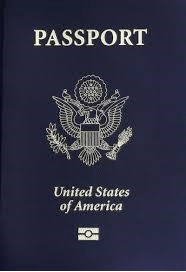
A person who received a permanent resident status in the US based on marriage to a US citizen, may apply for naturalization or US citizenship if he/she has been 2 years and 9 months in permanent resident status (provided all other conditions are met). To compare, the “regular” route would take 5 years (4 years and 9 months, as an applicant is allowed to submit his/her application 3 months in advance). However, the faster way comes at a price. Not only a citizenship status seeker has to demonstrate that he/she has been physically in the country for a required period of time, complied with good moral character requirements, paid taxes and obtained the “green card” legally, but will also have to demonstrate that the marriage he/she is in, is still ,in fact, a vital union…
Many couples for reasons of bad advice file their taxes separately. They choose “married filing separately” status thinking they would safe a couple of dollars. This is a big, big mistake. Not only it may result in tax penalties, but will for sure will result in Immigration problems. A couple who declares on their tax returns “separate” status risks denial of the spouse’s citizenship application. As such, if you made a mistake like this in the past, correct it as soon as possible. Always, consult with a Tax attorney or a qualified CPA.
Failure to list all of the couple’s children on permanent resident application may also lead to a denial. Often, applicants are confused and fail to list children from previous marriages (step-children) as couple’s children on the applications. USCIS, not without grounds, may conclude that the spouses are not aware of one another’s affairs, and as such, their marriage is not a real one… Even if the stepchildren are already adults, it is better to list them, then to face issues in the future.
Finally, USCIS requires one to submit evidence of vital marriage during the application, which may include joint bills, statements of joint bank accounts, evidence of joint ownership of property, etc. It means that a couple who went through the process of proving a “real marriage” twice (first for a conditional green card, and then again when the non -citizen applied to remove the condition) would have to go through the same (or almost the same) process again. One should keep every single piece of paper (or almost every single piece) to be prepared for the process.
Finally, I should mention here, that abused spouses, beneficiaries of I-360 who filed for it based on a marriage to an abusive US citizen spouse, may use the 3- year route as well. They would have to show different evidence, of course, consistent with their previous applications.
If you have any questions, you are free to call us at 917-885-2261 or submit them by email: office@shautsova.com .
- Processing Times THE USCIS PROCESSING TIMES:
https://egov.uscis.gov/cris/processTimesDisplay.do
- The Administrative Appeals Office http://www.uscis.gov/portal/site/uscis/menuitem.eb1d4c2a3e5b9ac89243c6a7543f6d1a/?vgnextoid=dfe316685e1e6210VgnVCM100000082ca60aRCRD&vgnextchannel=dfe316685e1e6210VgnVCM100000082ca60aRCRD
- Labor Department Processing Times
The following link provides approximate times for PERM processing periods:
http://icert.doleta.gov/#fragment-2
- Nonimmigrant Visa Wait Times
Depending on your location, the US Department of State provides the following approximate visa wait times:
http://travel.state.gov/visa/temp/wait/wait_4788.html?post=Kyiv&x=86&y=13
Watch our Videos: https://www.youtube.com/channel/UCBSrIQswMdYh_T1qToEZRrQ
Read our answers on AVVO and Law Q&A!


Leave a Reply