November 2016
Published by the Law Offices of Alena Shautsova, 2908A Emmons Ave, Brooklyn, New York 11235
175 Eileen Way, Syosset NY 11791
Subscribe to our monthly free legal updates, SHAUTSOVA’S UPDATE.
Follow our Blog Posts commenting on the latest developments in the immigration and civil rights world
http://www.workharassmentattorneys.com/
http://www.russianspeakinglawyerny.com

“Be the change that you wish to see in the world.”
― Mahatma Gandhi
NEWS FLASHES:
- Watch our recent videos:
Legally Speaking: US Immigration – Traveling with DACA status


Legally Speaking: Options to fix Immigration Status after entering the US Illegally
- EB-1A Visa for A Person of “Extraordinary Ability” How to, requirements and FAQ for complete simplified explanations.
Author: Green Card Attorney Alena Shautsova

When an individual first begins researching any visa that involves a person of “extraordinary ability” the first question that is always asked is “will I qualify as a person of extraordinary ability?” Here is a short article that may help you to answer this question.
What are the qualifications to be considered a person of extraordinary ability?
First Criteria
The Extraordinary ability for immigration purposes requires sustained national or international acclaim in your professional field. The legal preamble to the requirements set forth for EB-1A states that this category is reserved “for the small percentage of individuals who have risen to the very top of their field of endeavor.”
This can be evidenced by major internationally recognized achievements such as the Nobel Peace Prize or an Olympic medalist. One of the requirements of such recognized achievements and its importance is the amount of media coverage the event has received as well as the restrictions placed upon the field in which an individual may claim extraordinary ability.
For Example:
The Nobel Peace Prize
Olympic Medalist
Research Scientist
Individuals who possess Ph. D. qualifications
Mr. Universe
Internationally acclaimed pianist
These are simply examples of clear cut cases for EB-1A visa petitions. There is a wide variety of professionals who can be considered the top of their field of endeavor, for example, Karate is not currently an Olympic sport, however,if an individual possesses sufficient knowledge to be considered the top of his field of Karate they may qualify for EB-1A visa status.
If an individual cannot demonstrate that they have obtained status similar to the Nobel Peace prize then they must demonstrate 3 of the following 10 criteria designated by USCIS:
- Have you received any lesser nationally or internationally recognized prizes or awards for excellence in the field of endeavor?
- Are you a member of associations that require outstanding achievements of their members as judged by recognized national or international experts?
- Is there published material in professional or major trade publications or major media about you which relates to your work in the field?
- Have you participated on a panel or individually as a judge of the work of others in the same or in an allied field of specialization?
- Have you made original scientific, scholarly or business contributions that are of major significance?
- Have you authored scholarly articles in professional journals or other major media?
- Has your work been displayed at artistic exhibitions or showcases?
- Have you played a leading or critical role for an organization with a distinguished reputation?
- Have you or will you command a high salary or other remuneration for your services in comparison to others in your field?
- Have you enjoyed commercial successes in the performing arts?
If you believe that you qualify for at least 3 out of the 10 referenced criteria you may qualify for an EB-1A Visa.
Second Criteria
The second set of criteria that needs to be established to solidify your qualifications as an EB-1A visa holder is that you must demonstrate that you will continue to work in your area of expertise while in the US.
For example, Justin Bieber at one point held an EB-1A Visa, if at that point he decided that he wanted to make a career change and be an actor instead of a singer like Jennifer Lopez he would fail to qualify for USCIS’ second set of criteria. It is very specific and held to a high standard. Justin Beiber’s options at that point in time would have been to continue his singing career, or alternatively, he could have potentially coached individuals for professional singing.
Another example of this criteria is that a famous Russian Samba boxer decides that he is getting too old to continue competing, he now can train students to compete for Samba. He cannot open up a restaurant with his earningsuntil he has adjusted his status at least to a green card holder.
- Non Military Parole in Place
Author: Green Card Attorney Alena Shautsova
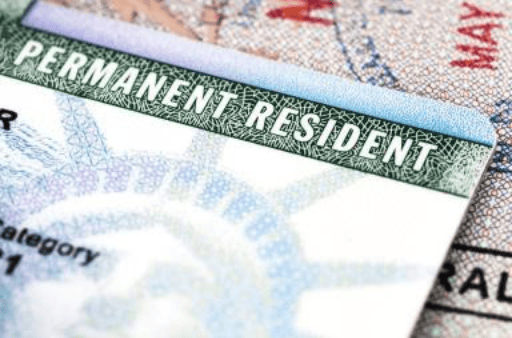
Parole in Place for Immigration purposes was a “gift” expanded in 2013 for those who have entered without inspection and had military family members. Many individuals were able to adjust their status legally without having to leave the country or go through a complex waiver process. The expansion of this benefit left many people asking “What about individuals without inspection who do not have military family members?” When deciphering the legal memorandum of law in which the benefit was written it occurs that USCIS officers have in their discretion the ability to parole a foreign national in place, not specifying whether or not the individual needs to have a military family member or not. These instances of granting parole in place are used “sparingly,” as USCIS states, and only under an extreme compelling evidence. They later explain that military family members who possess certain criteria should be granted parole in place. What is not explained is the evidence or circumstances one should present when filing for parole in place without a military family member.
A recent AILA question and answer with USCIS officials resulted in USCIS answering this question vaguely, their response is as follows:
“Parole-in-place is used sparingly due to compelling humanitarian or national interest reasons. USCIS may grant parole-in-place for urgent humanitarian reasons, but primarily exercises this discretion in issuing parole-in-place to current and former members of the U.S. Armed Forces and those in the Selected Reserve of the Ready Reserve and certain military family members.”
Recently AILA has released information regarding a foreign national that was granted a “deferred action” in their case when applying for humanitarian parole. The petition was based on the fact that they would most likely be persecuted in their home country if they were forced to travel back home in order to adjust status legally after the approval of an I-601A waiver. The case was determined with deferred action on a technicality. If the person applying had instead of applying for humanitarian parole, applied for parole in place, they may have been granted the application. It is a common mistake amongst pro-se applicants to believe that the law regarding humanitarian parole allows a foreign national to be paroled into the country only when outside of the country. The only way to “enter” the US for immigration purposes while still in the US is through a parole in place. Parole in place without having a US military family member is difficultand as stated above, the reasons for such an exception must be compelling.
Reasons may vary but potential compelling reasons for parole in place may be as follows:
- An individual from Russia is now married to a person of the same sex. They wish to adjust status, but to do so they would have to return to Russia where homosexuality is illegal. It is fair to assume that should this person return to Russia even for a few days, they may face persecution.
- An individual from South America who crossed the boarder illegally fled due to threats from gangs. They are now eligible to adjust status and are eligible to receive an I-601A waiver. If they return to their home country they may encounter the gang that threatened them, placing them in harms way. Their must be significant evidence that the gangs are targeting this person specifically to receive a potential parole in place.
Where to file a request for parole in place? The filing of the request would depend on the stage of one’s individual immigration proceedings. For example, a person in removal proceedings or with an order of deportation/removal issued, would have to submit his/her application with the local ICE office. Otherwise, the application should be submitted with the USCIS District director.
There is no fee for this application. The author of this article is aware that currently, the USCIS/ICE offices that accept non-military paroles in place applications are Florida and New Jersey.
- Processing Times THE USCIS PROCESSING TIMES:
https://egov.uscis.gov/cris/processTimesDisplay.do
- The Administrative Appeals Office http://www.uscis.gov/portal/site/uscis/menuitem.eb1d4c2a3e5b9ac89243c6a7543f6d1a/?vgnextoid=dfe316685e1e6210VgnVCM100000082ca60aRCRD&vgnextchannel=dfe316685e1e6210VgnVCM100000082ca60aRCRD
- Labor Department Processing Times
The following link provides approximate times for PERM processing periods:
http://icert.doleta.gov/#fragment-2
- Nonimmigrant Visa Wait Times
Depending on your location, the US Department of State provides the following approximate visa wait times:
http://travel.state.gov/visa/temp/wait/wait_4788.html?post=Kyiv&x=86&y=13
Watch our Videos: https://www.youtube.com/channel/UCBSrIQswMdYh_T1qToEZRrQ
Read our answers on AVVO and Law Q&A!


Leave a Reply